
How Do You Design Landscapes That Thrive in Arizona's Toughest Conditions?

Great Landscape Design Starts with the Right Plant Selection
Designing landscapes that thrive in Arizona's toughest conditions begins with understanding the challenges plants face long after installation. Extreme heat, reflected sunlight, compacted soils, limited water resources, and expanding urban development all place tremendous stress on landscape plants. While every project begins with a vision, its long-term success depends on selecting plants that are adapted to these demanding conditions.
Landscape architects are no longer designing landscapes simply to survive construction. They are creating outdoor spaces expected to perform beautifully for decades while meeting sustainability goals, reducing maintenance costs, and improving quality of life.
Thoughtful plant selection makes that possible.

Why Is Arizona's Built Environment So Challenging?
Natural desert ecosystems and commercial landscapes are very different growing environments.
In nature, plants develop under conditions that have evolved over thousands of years.
In cities, landscapes must contend with challenges such as:
Pavement and concrete that radiate heat
Limited rooting space
Disturbed or compacted soils
Irrigation restrictions
Air pollution
Heavy pedestrian traffic
Higher maintenance expectations
These conditions create environments where many plants struggle unless they are specifically adapted for urban landscapes.
Designing for Heat, Not Just Climate
Arizona's climate is already demanding, but the built environment often creates temperatures significantly hotter than surrounding natural areas.
This phenomenon, known as the urban heat island effect, occurs when asphalt, concrete, rooftops, and buildings absorb and release heat throughout the day and evening.
As a result, plants may experience:
Higher soil temperatures
Increased water stress
Greater evaporation
More intense reflected sunlight
Longer periods of heat exposure
Designing successful landscapes means selecting plants that can continue to perform under these intensified conditions.
Water-Wise Landscapes Require Thoughtful Plant Selection
Water conservation continues to influence landscape design throughout Arizona and the Southwest.
Rather than relying on irrigation to compensate for poor plant choices, today's landscape architects increasingly prioritize plants that perform well under responsible water management.
Selecting drought-adapted plants helps support:
Sustainable landscape practices
Municipal water conservation goals
Lower maintenance costs
Long-term landscape resilience
The best-performing landscapes are often those where plant selection and irrigation strategies work together rather than compete.
Soil Matters More Than Many People Realize
Healthy plants begin below ground.
Unfortunately, soils in the built environment are frequently disturbed during construction and may become compacted, alkaline, or low in organic matter.
Even well-designed irrigation systems cannot overcome poor soil conditions if the wrong plants are installed.
Choosing plants adapted to Arizona's soils helps improve establishment, encourage healthy root development, and support long-term performance.

Plants That Thrive in Arizona's Toughest Conditions
The most successful commercial landscapes pair thoughtful design with plants selected for resilience.
Texas Sage
Texas Sage remains a favorite among landscape professionals because of its exceptional tolerance for heat, reflected sunlight, and drought. Civano's original Texas Sage, 'San Antonio Rose,' represents a fine example of a tough plant with large magenta blooms. Its attractive silver foliage and seasonal blooms provide year-round visual interest while supporting water-wise landscape design.

Hesperaloes
Hesperaloes offer striking architectural form, outstanding drought tolerance, and excellent performance in challenging soils. Their ability to thrive in high-exposure planting areas makes them valuable choices for commercial developments, streetscapes, and contemporary landscapes. A great pollinator attracting hesperalo from the Civano Originals collection is 'Stoplights', with a compact form and long tubular-shaped flowers, it is a favorite for hummingbirds.
Civano Seedless Chilean Mesquite
Shade is one of the most valuable design elements in Arizona landscapes.
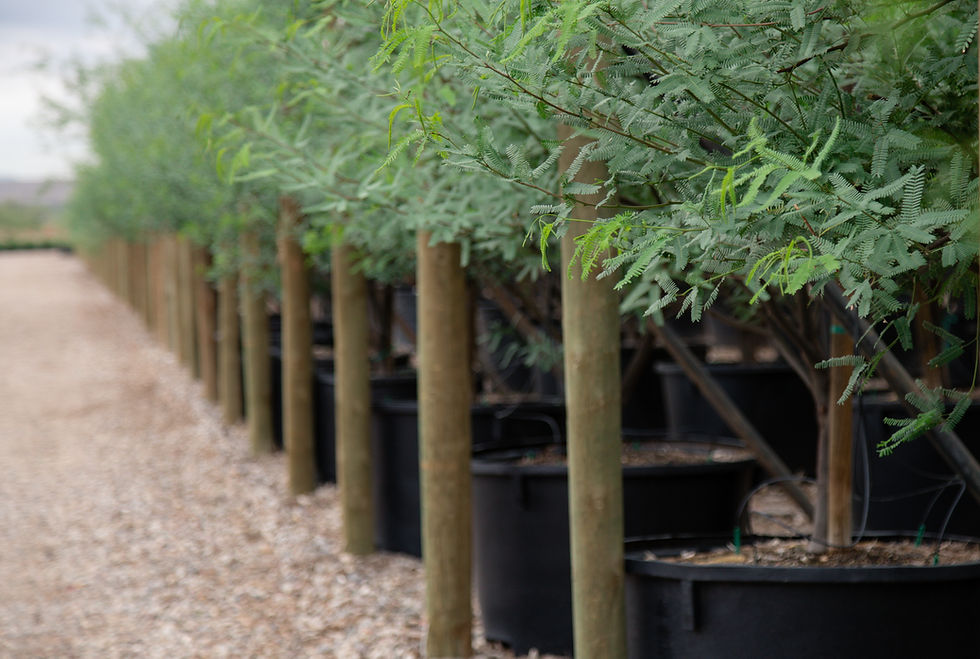
The Civano Seedless Chilean Mesquite combines generous shade with characteristics that simplify long-term maintenance by eliminating seed pods and thorns. It is well-suited for parking lots, civic spaces, HOA communities, and commercial landscapes where comfort, durability, and reduced maintenance are priorities.
Desert Willows
Desert Willows provide vibrant seasonal blooms while thriving in intense heat and low-water conditions.
Improved selections, including Sweet Bubba Seedless Desert Willow, retain the ornamental beauty designers appreciate while eliminating seed pods that can increase maintenance in highly managed landscapes.
Together, these plants demonstrate how selecting the right species—and the right cultivated selections—can improve landscape performance under demanding conditions.

Designing Landscapes That Will Thrive for Decades
Successful landscapes are measured over decades, not seasons.
When evaluating plant selections, landscape architects should consider questions such as:
Will this plant tolerate reflected heat?
Is it adapted to urban soils?
Can it perform under responsible water management?
Will it maintain its intended form as it matures?
Does it help reduce long-term maintenance?
Will it continue supporting the original design vision twenty years from now?
The answers to these questions often determine whether a landscape merely survives—or truly thrives.
FAQ
How do you design landscapes that thrive in Arizona's toughest conditions?
Successful landscapes begin with plants that are adapted to extreme heat, urban heat islands, poor soils, and responsible water use. Matching plant characteristics to site conditions helps improve long-term performance and reduce maintenance.
What is the urban heat island effect?
Urban heat islands occur when buildings, pavement, and other hardscape materials absorb and radiate heat, creating temperatures significantly higher than nearby natural landscapes.
Why is plant selection so important in commercial landscapes?
Plant selection influences maintenance costs, water use, shade, long-term appearance, and the overall success of a landscape. Choosing plants adapted to the built environment helps preserve the original design intent.
Which plants perform well in Arizona's built environment?
Heat- and drought-adapted plants such as Texas Sage, Hesperaloes, Desert Willows, and improved mesquite selections are commonly specified because they tolerate the demanding conditions found in commercial and municipal landscapes.
Every landscape is a long-term investment. By designing for the realities of Arizona's built environment—and selecting plants that are adapted to extreme heat, challenging soils, and water-wise management—landscape architects can create resilient spaces that continue to provide beauty, shade, and value for generations. At Civano Growers, thoughtful plant selection is at the heart of every landscape's long-term success.
Discover how Civano Growers helps landscape professionals create resilient landscapes with carefully selected trees, shrubs, and desert-adapted plants for the Southwest.


Comments